
Silver For IRA: A Guide To Adding Precious Metals To Your Retirement
Companies featured here may provide compensation for click throughs. This is how I maintain free research for consumers. My full disclosure of who I invested with is on this page for transparency.
 By Tim Schmidt Sr.
Gold and Silver IRA Investor.
Adding silver to your IRA can diversify your retirement portfolio and help hedge against inflation. This practical guide is for investors interested in understanding the rules, benefits, and steps involved in holding physical silver in a self-directed IRA. You’ll learn about eligible silver products, IRS requirements, costs, and how to set up and manage a compliant silver IRA. Whether you are new to precious metals or looking to expand your retirement strategy, this guide will help you navigate the process and avoid common pitfalls.
This guide explains how to add silver to your IRA, including rules, benefits, risks, and step-by-step setup instructions.
What Is A Silver IRA And How It Works
Self-Directed IRA Basics
A silver IRA is a self-directed individual retirement account that allows you to own silver and other precious metals in your portfolio. The “self-directed” label simply means the investor can direct the account into alternative assets, precious metals, real estate, private notes, while an IRS-approved custodian administers the account.
Key mechanics:
- The account is opened with a self-directed IRA custodian, not a standard brokerage.
- The investor selects eligible silver products and a depository for storage.
- An independent custodian administers the IRA: the metal is held by a qualified depository. Personal possession is not allowed.
- Purchases and sales flow through the custodian: proceeds remain in the IRA to preserve tax advantages.
Traditional, Roth, And SEP Options
Silver for IRA investing can be structured as:
- Traditional IRA: Contributions may be tax-deductible (subject to income and plan participation rules). Distributions are taxed as ordinary income. Required minimum distributions (RMDs) generally begin at age 73 under current law.
- Roth IRA: Contributions are after-tax: qualified withdrawals are tax-free. No RMDs for the original owner.
- SEP IRA: For self-employed individuals and small businesses: employer contributions are tax-deductible, and investments, including eligible silver, follow the same precious metal rules. RMDs apply like a Traditional.
The precious metal rules are the same across these IRA types: only contribution and withdrawal taxation differs.
Benefits And Risks Of Holding Silver In An IRA
Diversification And Correlation Benefits
Silver historically shows low to moderate correlation to equities and traditional fixed income. That means during certain equity drawdowns or rate shocks, silver may behave differently. Even a modest 5–10% allocation can alter a portfolio’s risk profile, potentially smoothing volatility or providing ballast during stress.
Inflation Hedging And Tail-Risk Protection
Silver, like other precious metals, is a hard asset with no credit risk. Silver can also act as a hedge against the devaluation of the US dollar due to inflation, helping protect your retirement savings from currency risk. It has tended to respond to real-rate declines, currency debasement concerns, and systemic stress. While not a perfect inflation hedge month to month, over longer cycles silver has helped preserve purchasing power and can serve as a form of tail-risk insurance when financial assets face correlated declines.
Volatility, Opportunity Cost, And Liquidity Trade-Offs
Silver is more volatile than gold and far more volatile than broad bond indexes. Silver IRAs can be more volatile than gold due to the lower price of silver and frequent price fluctuations, and the price of silver directly impacts the value of a silver IRA. In strong equity bull markets, silver can lag, creating opportunity cost. Liquidity exists, but investors should expect bid–ask spreads and premiums that are wider than for large-cap stocks or ETFs, particularly for certain coins or during market surges. A disciplined plan for sizing and rebalancing is essential.
IRS Rules: Eligible Silver, Custodians, And Depositories
Purity Standards And Approved Coins/Bars
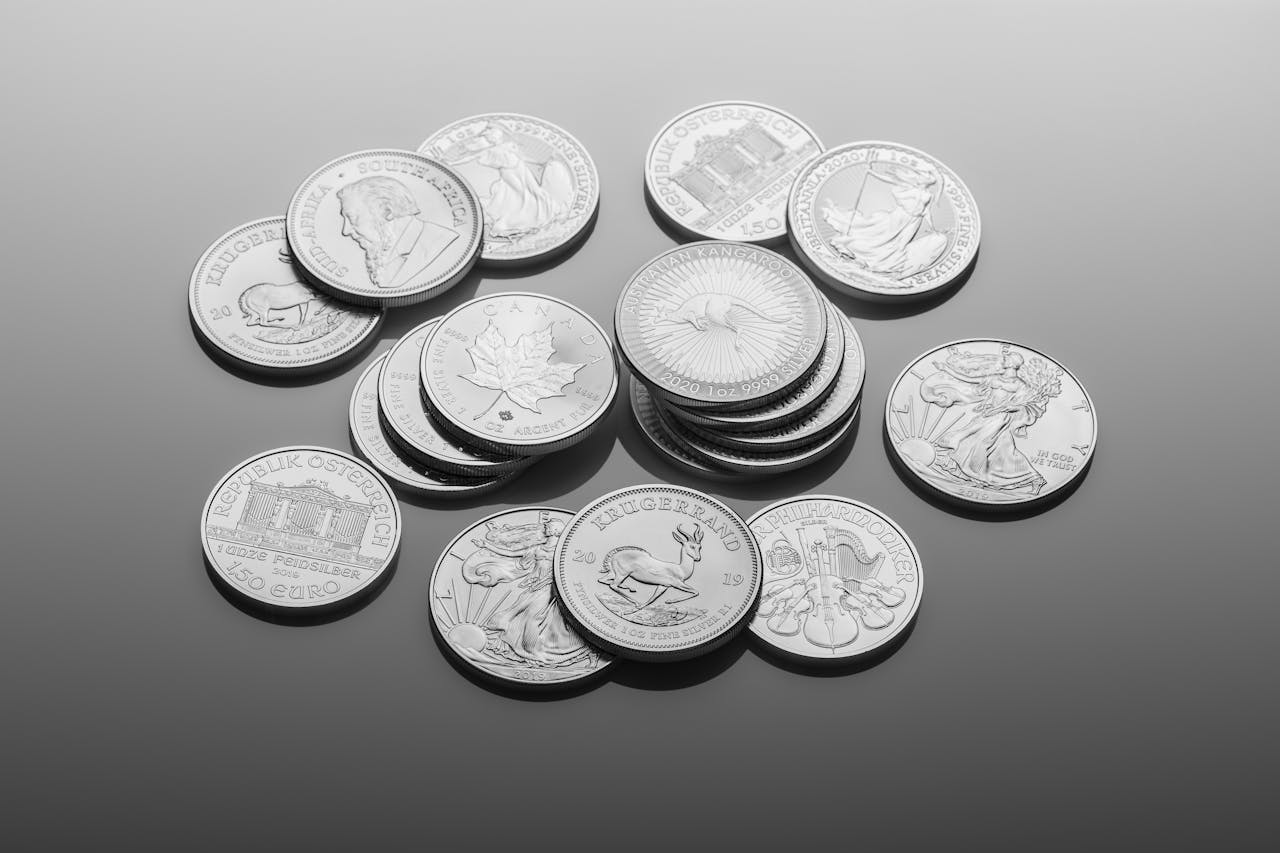
The IRS requires that any physical silver bullion held in an IRA must be at least 99.9% pure. IRS rules (IRC §408(m)) require silver in IRAs to meet specific fineness: generally 0.999 (99.9%) purity or better. Common IRA-eligible silver examples include:
- American Silver Eagle coins (U.S. Mint)
- Canadian Silver Maple Leaf
- Austrian Philharmonic, UK Britannia, and other government-minted bullion meeting purity standards
- Bars and rounds of .999+ fineness from NYMEX/COMEX or LBMA-approved refiners/mints
Numismatic or collectible pieces typically don’t qualify even if the metal content is high. Stick to standard bullion products from recognized mints and refiners.
Collectibles Restrictions And Prohibited Transactions
IRAs generally cannot hold “collectibles,” including most coins, art, and antiques. Violations can disqualify the IRA, making the metal a taxable distribution. Other prohibited transactions include self-dealing, using the IRA for personal benefit (e.g., storing IRA silver at home, buying from or selling to oneself or family, pledging IRA assets as collateral). Keep a clean separation: all deals must flow through the custodian and be stored at an approved facility.
Role Of IRS-Approved Custodians And Depository Storage
Investors must use a Self-Directed IRA (SDIRA) with a specialized custodian to hold IRS-approved silver. An IRS-approved custodian (or trustee) must administer the IRA, keep records, and report to the IRS. The silver itself must be held by an approved depository, not the investor’s safe or bank box. Well-known depositories include facilities operated by firms such as Delaware Depository, Brinks, and IDS: they provide secure storage, audits, and insurance coverage.
Common Pitfalls and Compliance Issues
When investing in a Silver IRA, it is crucial to avoid common mistakes that can lead to tax penalties or disqualification of your account. Key compliance issues include:
- Storing IRA silver at home is considered a taxable distribution, which incurs penalties.
- Collectors’ coins, jewelry, and pre-1965 US silver coins do not meet IRA requirements and are prohibited.
- Only silver that is 99.9% pure is allowed in a Silver IRA.
- Investors must use a Self-Directed IRA (SDIRA) with a specialized custodian to hold IRS-approved silver.
- You do not hold or store the silver yourself while it is in your IRA; it must be stored by the custodian in an approved depository.
- Silver IRAs generally incur higher fees than traditional IRAs due to the costs of handling physical assets.
- Silver market prices can be more volatile than gold prices, impacting liquidity and potential selling.
- Silver IRAs do not generate dividends or interest, which can be a drawback compared to other investments.
- Investors may face additional costs for storage and insurance when holding silver in an IRA.
- Withdrawals from a silver IRA before age 59 ½ may incur taxes and penalties.
How To Open, Fund, And Roll Over A Silver IRA
Step-by-step summary:
- Find a self-directed IRA custodian that allows you to own silver and other precious metals in your portfolio.
- Open and fund your account by depositing cash or transferring funds from an existing retirement account.
- Instruct your custodian to purchase IRS-approved silver bullion.
- The custodian arranges for the silver to be stored in an approved depository; you do not hold or store the silver yourself.
I’ve compiled a list of silver IRA reviews in order to assist matching you up with a provider that meets your investment goals. Each company is fully vetted, reputable, and has a stellar track record.
Choosing A Custodian And Working With Dealers
- Vet custodians: Compare self-directed IRA custodians on fees, service, online access, and their network of approved depositories and dealers.
- Choose storage: Decide between segregated or commingled storage (more on this below) at a recognized depository.
- Coordinate with a dealer: Many custodians have relationships with bullion dealers. The investor can also select an independent dealer: the custodian executes payment and settlement to ensure compliance.
Transfers vs. Rollovers: Steps And Timelines
- Direct transfer (trustee-to-trustee) between IRAs: Typically the cleanest. Funds move custodian to custodian: the investor never touches the money. No 60-day clock and no withholding.
- Direct rollover from an employer plan (e.g., 401(k) to IRA): The plan sends funds directly to the IRA custodian. No mandatory 20% withholding and no 60-day risk.
- Indirect rollover: Funds are paid to the investor, who then has 60 days to deposit into a new IRA. Riskier and subject to the one-rollover-per-12-month rule across all IRAs.
Typical timeline: Opening a self-directed IRA can take 1–5 business days. Transfers often complete within 5–15 business days depending on the relinquishing institution. Metal purchases occur after cash arrives in the self-directed IRA.
Avoiding 60-Day And Withholding Pitfalls
- If an indirect rollover is used from an IRA, deposit within 60 days or the distribution becomes taxable (and may trigger penalties if under age 59½).
- Only one indirect IRA-to-IRA rollover is allowed in any 12-month period across all IRAs, regardless of how many accounts exist.
- Employer plan distributions paid to the individual are generally subject to 20% mandatory withholding. To roll over the full amount, the investor must replace the withheld portion from other funds, another reason to prefer direct rollovers.
Costs, Storage, Insurance, And Liquidity
Setup, Annual, And Transaction Fees
Expect three cost categories:
- Custodial fees: Setup ($25–$100), annual administration ($75–$300+), and per-transaction charges.
- Storage fees: Flat ($100–$300+) or percentage-based (commonly 0.4%–1.0% of asset value). Silver is bulky: percentage storage can add up for large allocations.
- Dealer economics: Premiums over spot and bid–ask spreads. For common IRA-eligible silver coins, spreads can run several percentage points: bars generally carry lower premiums than small-denomination coins.
Compare total all-in costs, not just the headline storage number.
Segregated vs. Commingled Storage And Insurance Coverage
- Commingled: Your metal is stored alongside others’ of the same type and purity. You receive “like-kind” metal on withdrawal or sale. Usually cheaper.
- Segregated: Your specific bars and coins are stored in a separate, labeled space. Higher fees, maximum specificity.
Depositories typically carry all-risk insurance through major underwriters (often Lloyd’s market participants). Confirm policy limits, what events are covered, and whether coverage is allocated or pooled. Reputable facilities conduct regular third-party audits and maintain detailed inventory reporting.
Selling Metals And Meeting Liquidity Needs
To raise cash in the IRA, the investor instructs the custodian to sell specified products through an approved dealer. Settlement proceeds return to the IRA as cash. During periods of high demand, execution may slow and spreads can widen. Plan ahead for RMDs and other cash needs by maintaining an IRA cash buffer or liquidating incrementally rather than at the last minute.
Allocation, Tax Considerations, And Exit Strategy
Position Sizing, Rebalancing, And Discipline
Silver is a satellite holding for most investors. Common ranges are 3–10% of total investable assets, with higher allocations reserved for those with strong views on inflation, currency risk, or systemic stress. Establish rules before buying:
- Entry discipline: Ladder purchases over time to reduce timing risk.
- Rebalancing: Trim into strength and add on weakness according to pre-set bands.
- Product mix: Favor widely traded bullion coins and bars that are easy to sell and have tighter spreads.
Traditional vs. Roth Tax Treatment And RMD Planning
- Traditional IRA: Tax-deferred growth: withdrawals taxed as ordinary income. RMDs generally begin at age 73 under current rules. If metals must be sold to raise cash for an RMD, coordinate sales well ahead of year-end.
- Roth IRA: Qualified withdrawals are tax-free: no RMDs for the original owner, giving more flexibility on when to sell the metal.
Note: The 28% “collectibles” capital gains rate that applies to taxable accounts doesn’t apply to gains realized inside an IRA. For Traditional IRAs, taxation occurs on distribution at ordinary income rates instead.
In-Kind Distributions, Cashing Out, And Timing Sales
An IRA can distribute silver “in kind,” transferring specific coins/bars from the depository to the owner. Considerations:
- Valuation: The distribution amount equals the fair market value on the distribution date. Traditional IRA in-kind distributions are taxable as ordinary income: Roth qualified distributions are tax-free.
- Logistics and costs: Expect shipping, handling, and possibly re-assay costs later if selling to a dealer.
- Strategy: Many investors prefer selling inside the IRA to raise cash and distributing dollars, simplifying taxes and avoiding collectibles treatment in a taxable resale. Those who want long-term physical possession may opt for an in-kind distribution after weighing taxes and security.
Timing matters. Because silver can be volatile, spreading sales throughout the year or setting limit instructions with the dealer can reduce execution risk.
Conclusion
Silver for IRA accounts can add a real-asset spine to a retirement plan, useful diversification, potential inflation resilience, and a layer of tail-risk defense. But it’s not plug-and-play. Eligibility rules, custody requirements, premiums, storage fees, and RMD logistics all shape the true return and investor experience. Those who approach it with clear sizing rules, a reputable custodian and depository, and a sober exit plan tend to get the benefits they intended, without the avoidable headaches. For most, keeping silver to a measured slice of the portfolio and managing it with the same discipline applied to equities and bonds is the pragmatic path.
Key Takeaways
- A Silver IRA is a self-directed account holding IRS-approved 0.999 silver via a custodian and approved depository; personal possession is not allowed.
- Stick to eligible bullion (e.g., American Silver Eagles, Maple Leafs, LBMA/COMEX bars) and avoid collectibles or prohibited self-dealing to keep the IRA compliant.
- Silver for IRA can diversify portfolios and hedge inflation and tail risk, but its higher volatility and wider spreads call for modest sizing (about 3–10%) and disciplined rebalancing.
- Choose the right wrapper—Traditional (tax-deferred, RMDs at 73), Roth (tax-free withdrawals, no RMDs), or SEP—and note IRA gains aren’t subject to the 28% collectibles rate.
- Set up with a reputable self-directed custodian and approved depository, compare all-in costs (custody, storage, dealer premiums), and prefer direct transfers/rollovers to avoid 60-day and withholding traps.
- Plan liquidity by keeping an IRA cash buffer for RMDs, selling through the custodian when needed, or using in-kind distributions with awareness of taxes, shipping, and timing risk.
Frequently Asked Questions
What is a Silver IRA and how does it work?
A Silver IRA is a self-directed IRA that holds IRS-approved silver coins and bars. You open it with an IRS-approved custodian, select eligible silver and a qualified depository, and all buys/sells flow through the custodian. Personal possession isn’t allowed; assets stay inside the IRA to preserve tax benefits.
Which silver coins and bars are IRA-eligible?
Under IRC 408(m), silver must generally be 0.999 purity or better. Common eligible items include American Silver Eagles, Canadian Maple Leafs, Austrian Philharmonics, UK Britannias, and .999+ bars/rounds from LBMA/COMEX-approved refiners. Numismatic or collectible coins usually don’t qualify—stick to standard bullion from recognized mints/refiners.
How do I transfer or roll over funds into a Silver IRA without tax issues?
Prefer direct transfers (IRA-to-IRA) or direct rollovers (e.g., 401(k) to IRA) so money moves custodian to custodian—no 60‑day clock or mandatory withholding. Indirect rollovers paid to you start a 60‑day deadline and are limited to one per 12 months. Missed deadlines can trigger taxes and penalties.
What costs and storage options should I expect with Silver for IRA accounts?
Expect custodial setup and annual fees, storage fees (flat or 0.4%–1.0% of value), and dealer premiums/spreads. Commingled storage is cheaper and returns like-kind metal; segregated stores your specific pieces at higher cost. Reputable depositories carry insurance, conduct audits, and provide detailed inventory reporting.
How much Silver for IRA exposure makes sense in a portfolio?
Silver is typically a satellite allocation. Many investors target 3%–10% of investable assets, using higher allocations only with strong views on inflation or systemic risk. Set rules: ladder purchases, rebalance on bands, and favor liquid bullion products. Keep a cash buffer for RMDs or planned withdrawals.
Silver IRA vs. silver ETFs or mining stocks in an IRA—what’s the difference?
A Silver IRA holds physical bullion in a depository, adding hard-asset diversification and no issuer credit risk, but with storage fees and wider spreads. Silver ETFs offer easier trading and lower transaction costs but introduce fund/structural risks. Mining stocks add company and equity market risk, often with higher volatility.